Guide · Memory and your doctor
Forgetful? Signs Memory Needs a Doctor, Not a Pill
Memory needs a doctor when forgetting gets in the way of daily life, when family notice a change you do not, or when it arrives suddenly or after a new medicine. A supplement such as MemoPryl cannot sort out the cause. A clinician can, and many causes are fixable.
Written by the MemoPryl label deskUpdated
Is it normal to forget things as I get older?
Yes, some forgetfulness is a normal part of aging. Missing a name, then recalling it an hour later, is rarely a warning. The National Institute on Aging says problems with recent events or clear thinking are reasons to talk with a doctor (NIA, Forgetfulness: When to Ask).
The line is not how often you forget. It is what the forgetting costs you. A misplaced key you later find is one thing. A key you find in the freezer, with no idea how it got there, is another.
The same agency states plainly that dementia is not a normal part of aging (NIA, Forgetfulness: When to Ask).
Read this as a sorting question. If the slip is rare, brief and fixed by a note on the fridge, keep an eye on it. If it repeats, spreads to new areas or worries you, book the visit.
Write down three recent slips with dates. A short list helps a clinician far more than "my memory is bad."
Which memory changes mean I should call a doctor?
Seven signs call for an appointment. They come from NIA's list of mild cognitive impairment and possible dementia signs (NIA, Forgetfulness: When to Ask). One of them is enough. You do not need all seven.
Mild cognitive impairment is an early stage in which people still handle most daily tasks on their own, and catching it early matters (Alz. Assoc., Mild Cognitive Imp.).
Check each line below against the last few months, not the last few days.
DoctorAny of these is a reason to book a visit. A supplement is not a way to wait, and only a clinician can say what a memory change means.
- 01Losing things often
- 02Forgetting important events or appointments
- 03Trouble remembering recent events
- 04Trouble thinking clearly
- 05Getting lost in a place you know well
- 06Family or friends notice a change you do not
- 07A new memory change after starting any medicine or supplement
Signs adapted from NIA (NIA, Forgetfulness: When to Ask) and the Alzheimer's Association (Alz. Assoc., Mild Cognitive Imp.). This is a prompt to talk to a doctor, not a screening test.
The last flag is the one buyers miss: a new memory change after starting any medicine or supplement belongs on the list too.
What else besides dementia can make memory worse?
Quite a lot, and many of the causes can be treated. That is the main reason to see a clinician before buying anything. A capsule cannot tell a thyroid problem from poor sleep.
Doctors usually start with simple questions and basic tests. The aim is to rule out the common, fixable causes first, then look further if the problem stays.
Sleep
Both deep and dream sleep help you store memories, and poor sleep dulls recall (NIA, Sleep and Older Adults). Snoring, long pauses in breathing and waking unrefreshed are worth mentioning.
Medicines
Some prescription drugs cause fog or confusion, especially in combination. Bring every bottle, including over-the-counter pills and herbs.
Mood and stress
Low mood, worry and grief all eat attention. When attention drops, memory looks worse than it is.
Body health
Thyroid trouble, low vitamin levels, infections and blood pressure problems can all show up as slow thinking. A blood test can check several at once.
If fog is your main word, the brain fog checklist walks through the everyday causes in order.
What should I do first if my memory worries me?
Book an appointment first, and treat any supplement as a later question. The four steps below put the visit ahead of the purchase, in the order that protects you most.
- 01
Read the bottle you receive
Check the safety seal, the capsule count (30 or 60), the directions and the Supplement Facts panel. No image we have shows a panel, so the bottle is the source.
- 02
Check your medicines first
St. John's wort weakens many medicines and ginkgo can raise bleeding risk. Before the first capsule, let your pharmacist see the bottle.
- 03
Take it as the bottle directs
No dose is printed on any image we have. Follow your bottle and never guess a dose from a website, this one included.
- 04
Write a date and a note
Note what you notice and when. If memory or thinking worries you, see a doctor; a supplement is not a way to wait.
If a clinician agrees that a supplement is a reasonable extra, show them the label. Our pharmacist question list helps you do that in two minutes.

MemoPryl: capsules in 2, 3 or 6 bottlesRead the bottle · check your medicines · 60-day window (confirm)
See packsHow do I prepare for the appointment?
Bring a short written list and, if you can, a person who knows you well. Clinicians get better information from a companion, because people often cannot see their own changes.
- Three to five recent examples, with rough dates.
- Every medicine, vitamin and herb you take, in the original bottles.
- Changes in sleep, mood, appetite or balance.
- Any head injury, fall or new illness in the past year.
- Your own questions, written down so you do not lose them.
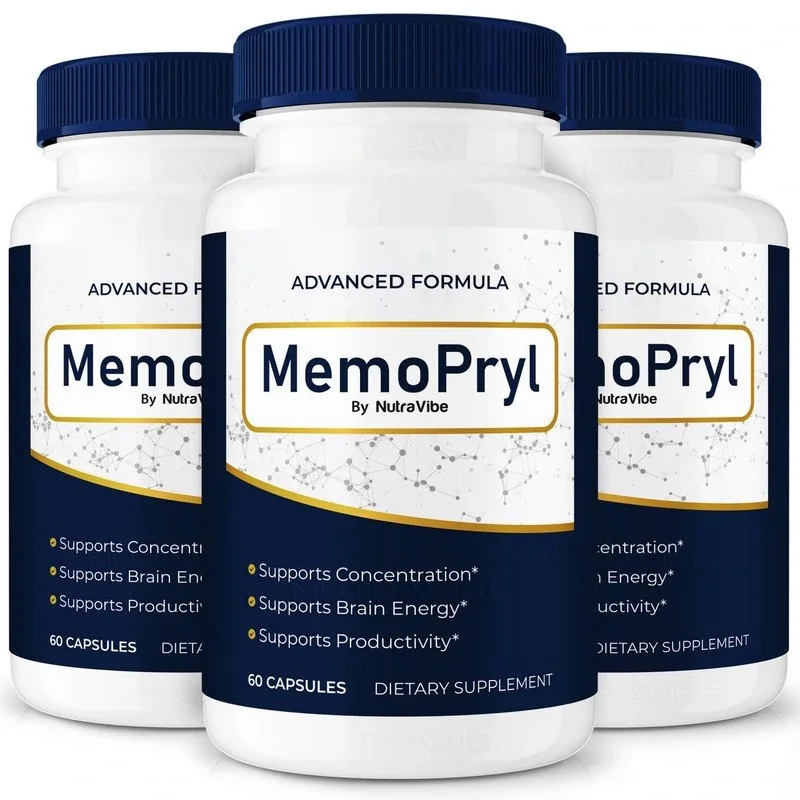
Those bottles matter. If MemoPryl or anything like it is on the shelf, say so. Two of the six names linked to it carry real interaction risks, covered below.
Can a memory supplement make the visit unnecessary?
No. A supplement cannot diagnose anything, and no ingredient linked to MemoPryl is shown to prevent or reverse memory loss. The biggest ginkgo trial, with more than 3,000 older adults, found no drop in dementia cases (DeKosky 2008, GEM trial, JAMA).
The U.S. FDA does not approve supplements before they are sold (FDA, Using Dietary Supplements). Claims such as "Supports Focus*" are structure and function wording, and the asterisk points to a disclaimer that FDA has not evaluated them (FDA, Structure/Function Claims).
There is also a safety side. Keep taking your prescribed medicine, and ask your doctor or pharmacist before you start any supplement. The table shows why the visit helps.
| Name (sibling pack, unconfirmed) | Risk worth raising | Who should ask first |
|---|---|---|
| St. John's wort | Can weaken antidepressants, birth control pills, blood thinners and some HIV, seizure, transplant and heart medicines (NCCIH, St. John's Wort safety) | Anyone taking prescription medicine |
| Ginkgo biloba leaf | May raise bleeding risk with blood thinners or aspirin (FDA, Mixing Meds and Supplements) | Anyone on a blood thinner or facing surgery |
| Amounts of either | Not published | Ask the seller for the panel |
Read the full list on the ingredients page. Tell your surgeon about supplements well ahead of any procedure, since clinicians often ask people to stop them two to three weeks before (FDA, Mixing Meds and Supplements).
What can I do every day while I wait for the appointment?
Sleep, movement and honest record keeping are the three habits with the best support. None costs anything, and none interferes with a medicine.
CDC says short bursts of activity can boost memory and thinking skills, and regular activity may lower the chance of mental decline (CDC, Physical Activity and Brain). Adults are advised to aim for 150 to 300 minutes of moderate activity a week, such as brisk walking (HHS, Physical Activity Guidelines). Older adults need about seven to nine hours of sleep a night (NIA, Sleep and Older Adults).
If a new reaction follows any capsule, stop it and call your clinician. Serious reactions can be reported to FDA (FDA, Report a Supplement Problem).
Sudden confusion, trouble speaking, a drooping face or a severe headache are emergencies, not memory questions. Call emergency services.
FAQ01
MemoPryl questions people ask
How do I know if my forgetfulness is serious?
Look at the effect on daily life. Occasional lapses you recover from are common with age. Losing things often, missing appointments, getting lost in familiar places or friends noticing a change are reasons to see a doctor. Any worry about memory is reason enough.
What is the difference between normal aging and mild cognitive impairment?
Normal aging brings slower recall that fades. Mild cognitive impairment is a noticeable change in memory or thinking while you still manage most daily tasks. Estimates put it at about 12 to 18 percent of people over 60, so ask a doctor to assess it.
Which doctor should I see about memory problems?
Start with your primary care clinician, who can check medicines, sleep, mood and basic blood tests. If needed, they refer you to a neurologist, geriatrician or memory clinic. Bring a list of examples and a family member if you can.
Can a supplement fix memory loss?
No supplement is proven to fix memory loss or prevent dementia. The largest ginkgo trial found no reduction in dementia. Because causes differ and some are treatable, get checked first, then ask a clinician whether any supplement fits you.
Should I stop MemoPryl before seeing my doctor?
Do not change prescribed medicine on your own. For a supplement, tell the clinician you take it and bring the bottle. If you notice a new reaction or a memory change after starting it, stop it and call your clinician.
Can medicines cause memory problems?
Yes. Some prescription and over-the-counter drugs cause fog, drowsiness or confusion, particularly when several are combined. Never stop a prescribed medicine without advice. Bring every bottle, vitamin and herb to the appointment so the clinician can review the full list.
How often should memory be rechecked after a diagnosis of MCI?
Alzheimer's Association guidance says people diagnosed with mild cognitive impairment should be reevaluated about every six months. Some stay stable and some return to normal, while others progress, so repeat checks track the change and adjust the care plan.
Who wrote this02
Written and reviewed by
Pages built from the bottle images, the seller's product notes and linked NIH, FDA, FTC and peer-reviewed sources.
Last updated . Learn about our editorial standards and how we check reviews. This website is run by Official stocking desk for MemoPryl, not by the manufacturer or the distributor of the bottle. We make money when you buy through our order links.
Keep reading
More about MemoPryl
Official stocking desk for MemoPryl
Ready to look at MemoPryl?
Read the bottle you receive, check your medicines with a pharmacist, then choose a pack. Prices and the guarantee terms are confirmed at checkout.
- Order desk: +1 (302) 200-3480
- 60-day window (confirm at checkout)
- Ships from the U.S. unless the checkout says otherwise