Ingredient scan 01
Phosphatidylserine in MemoPryl: What the Studies Say
Phosphatidylserine is a fat-like compound found in brain cell membranes, and it is the first of six names tied to MemoPryl through a sibling pack. Research is thin: one small trial and an FDA letter that found little scientific support. No image of the bottle prints an amount, so confirm it on the bottle you receive.
Written by the MemoPryl label deskUpdated
Scan 01 · The name01
What is phosphatidylserine, and why is it on a memory capsule?
Phosphatidylserine is a phospholipid, a fat-like molecule that sits in the membranes of cells, including brain cells. Supplement makers add it to capsules because it is sold for memory and thinking (Cleveland Clinic, Phosphatidyl.).
The body makes some of it, and food supplies more. A capsule is a different matter: it delivers a set amount of an extract, and the source of that extract varies by maker. The trial described below used a soy-derived version (Kato-Kataoka 2010, soy PS trial).
The name comes from the seller's product notes for a sibling MemoPryl pack. It is not confirmed for the bottle you receive. Check the Supplement Facts panel on your bottle, because no panel appears on any image we hold.
Next step: look for the words "phosphatidylserine" and a milligram figure on the panel. If one is missing, call the order desk before you open the bottle.
| Name in the seller's notes | Phosphatidylserine |
|---|---|
| What it is | A fat-like phospholipid found in cell membranes, including in the brain |
| On the bottle? | Unconfirmed: named in the seller's product notes from a sibling pack; no Supplement Facts panel was supplied |
| Amount per capsule | Not printed (no Supplement Facts panel supplied) |
| Amount used in research | 100 mg or 300 mg a day for six months in one trial of 78 adults (a typical adult intake is cited as 100 to 200 mg a day) |
| Strength of evidence | FDA allowed a claim only with the words 'very limited and preliminary scientific research'; FDA found little scientific evidence |
| Marketed use | Sold for memory and thinking |
| Main caution | May cause stomach upset, gas, insomnia or headache. |
Scan 02 · The evidence02
Does phosphatidylserine help memory?
Possibly a little, in some people, but the proof is weak. The best-known trial was small, and its main memory test showed no difference from placebo.
That trial enrolled 78 adults aged 50 to 69 who had noticed memory slips. They took 100 mg or 300 mg of soy phosphatidylserine a day, or a placebo, for six months. Scores rose in every group, placebo included. Gains over the starting point showed up only in people who began with lower memory scores, mainly on delayed word recall (Kato-Kataoka 2010, soy PS trial).
Read this as a hint, not a result. One small study cannot say whether a capsule changes daily life, and the researchers did not claim it could. The trial reported no adverse events linked to intake (Kato-Kataoka 2010, soy PS trial).
Broader reviews do not rescue the case. The National Academies found "insufficient high-strength experimental evidence" to justify a public campaign on preventing cognitive decline, and named no memory capsule among the supported steps (National Academies 2017 report). NCCIH calls the evidence for most memory supplements inconclusive or inconsistent (NCCIH, Supplements and Cognition).
Scan 03 · The FDA letter03
What did FDA say about phosphatidylserine and dementia?
FDA allowed only a heavily hedged claim, and it added that there is little scientific evidence behind it. The agency did not say the ingredient works.
In a 2003 letter, FDA permitted wording that phosphatidylserine "may reduce the risk" of dementia or cognitive dysfunction in older people, but only with a disclaimer. The disclaimer starts with "Very limited and preliminary scientific research suggests" and ends with FDA's own conclusion of little scientific evidence (FDA letter, PS health claim).
That is a narrow permission for a label sentence. It is not approval of a product. FDA does not approve supplements for safety or effectiveness before they are sold (FDA, Using Dietary Supplements).
What it says
A hedged claim is allowed with a disclaimer about limited research.
What it does not say
It does not say a capsule prevents, slows or treats any condition.
What to check
See whether your bottle makes any claim beyond the starred wording.
The two MemoPryl labels use starred wording such as "Supports Focus*" and "Optimized Memory*". Starred claims carry an FDA statement that the claim has not been evaluated (FDA, Structure/Function Claims).
MemoPryl: capsules in 2, 3 or 6 bottlesRead the bottle · check your medicines · 60-day window (confirm)
See packsScan 04 · Cautions04
Who should ask before taking phosphatidylserine?
Anyone who takes prescription medicine, is pregnant or nursing, or has a medical condition should ask a doctor or pharmacist first. Keep taking prescribed medicine while you ask.
Cleveland Clinic lists upset stomach, gas, insomnia, headache, skin rash, mood changes and low blood sugar as possible effects. It adds that phosphatidylserine may weaken anticholinergic drugs such as atropine (Cleveland Clinic, Phosphatidyl.).
The cautions for the other ingredients matter more on this formula. Ginkgo can raise bleeding risk, and St. John's wort clashes with many medicines (FDA, Mixing Meds and Supplements). A pharmacist can read your list against all six names at once.
Scan 05 · The amount05
How much phosphatidylserine is in a MemoPryl capsule?
Nobody outside the seller can say, because no image we hold prints a Supplement Facts panel. We will not guess a number.
Studies used 100 mg or 300 mg a day (Kato-Kataoka 2010, soy PS trial), and Cleveland Clinic cites a typical adult intake of 100 to 200 mg a day (Cleveland Clinic, Phosphatidyl.). Those figures describe research, not this product. They are not a dose for you.
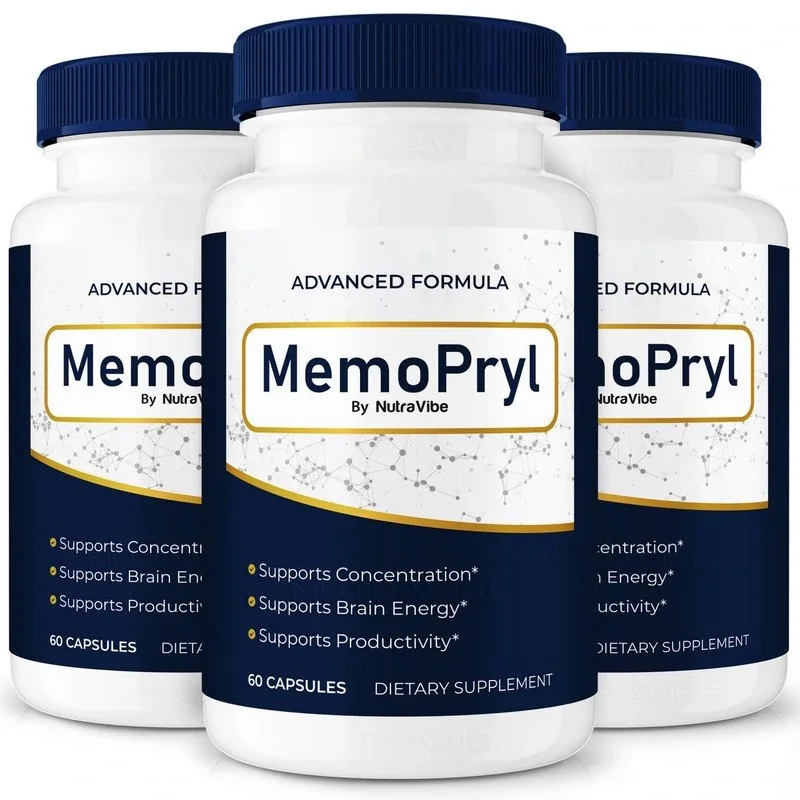
Two bottle images disagree on the capsule count, 30 on one label and 60 on the other, so the amount per capsule could differ between versions. The bottle you receive settles it.
- Find the serving size and the capsules per serving.
- Find the line for phosphatidylserine and its milligrams.
- Read the "other ingredients" line for allergens, especially soy.
- Follow the directions printed on the bottle, not a number from this site.
Soy is worth checking because trial material was soy-derived (Kato-Kataoka 2010, soy PS trial). Your bottle may use another source, and the label should say which.
Use the capsule guide to turn the printed directions into days of supply, and the full ingredient list to see the other five names.
FAQ06
Phosphatidylserine questions people ask
Is phosphatidylserine safe to take every day?
In the one trial we cite, adults took it daily for six months with no adverse events linked to intake. That is a single small study. Cleveland Clinic still lists stomach upset, insomnia and headache, so ask your doctor or pharmacist first if you take medicine.
Does phosphatidylserine interact with medicines?
It may weaken anticholinergic drugs such as atropine, according to Cleveland Clinic. Interaction data is limited, so give your pharmacist the full list of what you take. Keep taking prescribed medicine until you have asked.
What is the difference between soy and sunflower phosphatidylserine?
The difference is the raw material. The trial we cite used a soy-derived product. Our sources do not compare sources, so read the label for the origin and any soy allergen warning rather than assuming.
Can phosphatidylserine cause trouble sleeping?
Insomnia is among the effects Cleveland Clinic lists, along with upset stomach, gas and headache. Not everyone has them. If sleep changes after you start a supplement, stop, and tell your provider.
Did FDA approve phosphatidylserine for memory?
No. FDA allowed a qualified claim in 2003, with a disclaimer that research is very limited and that the agency found little scientific evidence. FDA does not approve supplements as products.
Is phosphatidylserine the same as a prescription for memory loss?
No. It is sold as a dietary supplement. Cleveland Clinic notes it is not FDA-approved to treat any medical condition. Ongoing forgetfulness deserves a doctor visit, not a capsule.
How many milligrams of phosphatidylserine does MemoPryl contain?
Not printed on any image we have. The six names come from a sibling pack, and no Supplement Facts panel was supplied. Read the panel on your bottle, and call the order desk if it is missing.
Who wrote this07
Written and reviewed by
Pages built from the bottle images, the seller's product notes and linked NIH, FDA, FTC and peer-reviewed sources.
Last updated . Learn about our editorial standards and how we check reviews. This website is run by Official stocking desk for MemoPryl, not by the manufacturer or the distributor of the bottle. We make money when you buy through our order links.
Keep reading
More about MemoPryl
Official stocking desk for MemoPryl
Ready to look at MemoPryl?
Read the bottle you receive, check your medicines with a pharmacist, then choose a pack. Prices and the guarantee terms are confirmed at checkout.
- Order desk: +1 (302) 200-3480
- 60-day window (confirm at checkout)
- Ships from the U.S. unless the checkout says otherwise