Label walkthrough
How MemoPryl Works: A Label-Reading Walkthrough
How MemoPryl works is not published. The bottle makes short structure and function claims about focus and memory, and no mechanism, trial or amount comes with them. Six ingredient names tied to a sibling pack each have their own research, mostly mixed. Read the claims, check the evidence, then ask a pharmacist.
Written by the MemoPryl label deskUpdated
So how does MemoPryl actually work?
Nobody has published how MemoPryl works. The bottle gives claims, not a mechanism, and no study has tested the product itself.
What you can read is the front label. It says things like "Supports Focus*" or "Supports Brain Energy*". Those are structure and function claims. A seller may make them without FDA review, as long as the label carries a disclaimer (FDA, Structure/Function Claims).
So the honest answer has three parts. First, what the label says it does. Second, what research exists on the six ingredient names tied to the product. Third, what is missing, which is a lot.
Check: does any image show an amount, a dose or a trial? None we hold does. Read everything below as a way to question the bottle, not as proof that it works.
What does each front-label claim say the capsules do?
Each claim says the capsules "support" a mental skill. None says the product treats a disease, and that is the legal line the asterisk marks.
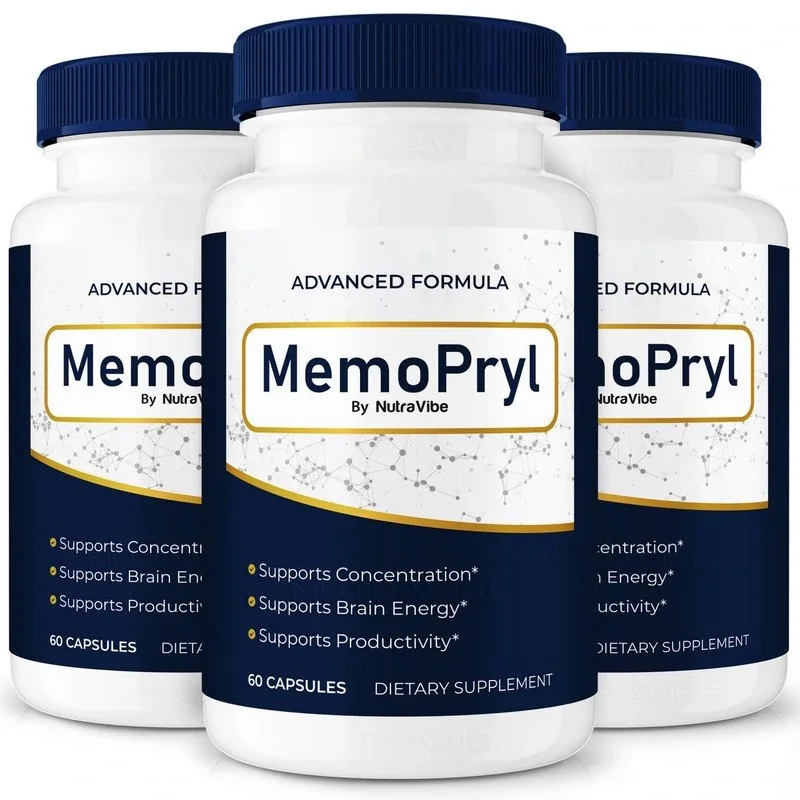
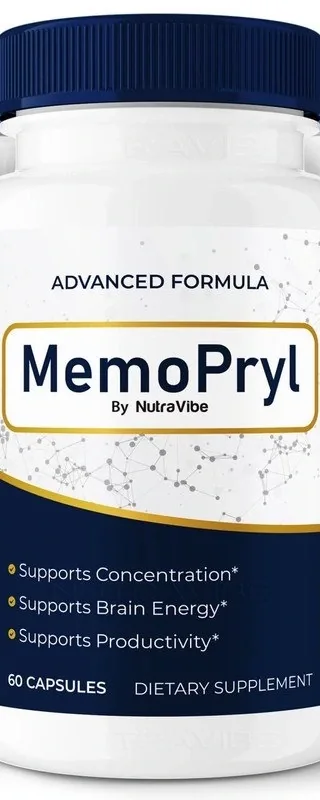
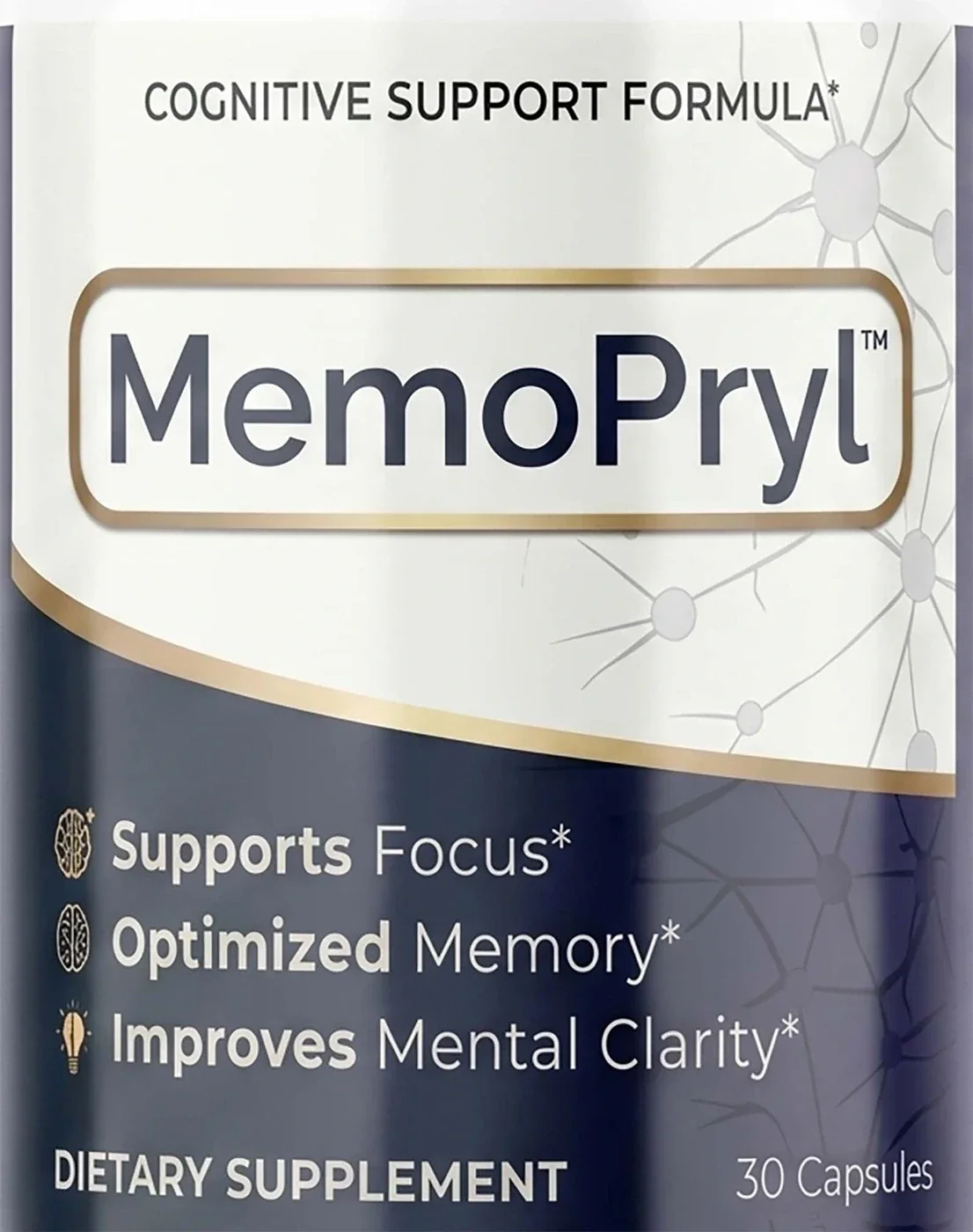
The two bottle photos carry different claim sets, so both are listed. Pick the one on the bottle in your hands.
| Label | Name on bottle | Count | Claims printed |
|---|---|---|---|
| A | COGNITIVE SUPPORT FORMULA* | 30 Capsules | Supports Focus*, Optimized Memory*, Improves Mental Clarity* |
| B | ADVANCED FORMULA, By NutraVibe | 60 CAPSULES | Supports Concentration*, Supports Brain Energy*, Supports Productivity* |
Read this as marketing language. "Supports" is soft by design. "Optimized Memory" and "Improves Mental Clarity" sound stronger, yet no measurement stands behind either phrase on the images we hold.
Next step: if the claim on your bottle names a result, look for the asterisk and the FDA statement near it. Both should be on the label.
What are the steps from bottle to capsule?
Four steps, in this order: read the bottle, ask about your medicines, take it as printed, then keep notes. The order matters more than the speed.
Most of the risk sits in step two. Two of the six names have documented medicine problems, covered further down.
- 01
Read the bottle you receive
Check the safety seal, the capsule count (30 or 60), the directions and the Supplement Facts panel. No image we have shows a panel, so the bottle is the source.
- 02
Check your medicines first
St. John's wort weakens many medicines and ginkgo can raise bleeding risk. Before the first capsule, let your pharmacist see the bottle.
- 03
Take it as the bottle directs
No dose is printed on any image we have. Follow your bottle and never guess a dose from a website, this one included.
- 04
Write a date and a note
Note what you notice and when. If memory or thinking worries you, see a doctor; a supplement is not a way to wait.
The longer routine, with a 24-hour view, is on the how-to-use guide.
What are the six named ingredients said to do?
They are sold for memory, focus, mood or energy. Each name comes from a sibling MemoPryl pack, not from either bottle photo, so confirm them on your bottle.
In plain words, this is what each is studied for. "Studied for" is not "does".
Phosphatidylserine
A fat-like part of cell membranes. One six-month trial of 78 adults found gains mainly in people who started with lower memory scores (Kato-Kataoka 2010, soy PS trial).
Ginkgo biloba leaf
A leaf extract. A large trial of 3,069 older adults found no drop in dementia cases (DeKosky 2008, GEM trial, JAMA). It may raise bleeding risk.
N-acetyl L-carnitine
A compound the body makes. A Cochrane review found no effect on dementia severity and did not back routine use (NIH ODS, Carnitine).
St. John's wort
Studied for low mood, not memory. It weakens many medicines (NCCIH, St. John's Wort safety).
Brahmi (bacopa)
An Ayurvedic herb. Pooled trials hint at faster attention after 12 weeks or more (Kongkeaw 2014, Bacopa meta-analys.).
L-glutamine
An amino acid. It is not described as a memory supplement (MSK, Glutamine).
Do they work together? No study of this mix exists, so no one can say. Open the full ingredients list for the page on each name.
MemoPryl: capsules in 2, 3 or 6 bottlesRead the bottle · check your medicines · 60-day window (confirm)
See packsDo the capsules hold the amounts the studies used?
No one can tell, because no amount is printed on any image. A study result only applies at the amount the study used.
The bars below show the amounts tested in trials. The dashed bar stands for the MemoPryl amount, which is empty because nothing is published.
A capsule that holds far less than a trial used cannot be expected to act like the trial. A capsule that holds far more raises a safety question. Either way, the Supplement Facts panel is the page to read, and our label page explains what is missing from it.
What can a supplement like this realistically do?
Probably less than the front label suggests. The biggest studies of memory supplements, ginkgo among them, found no lower rate of dementia (NCCIH, Supplements and Cognition).
An expert panel on cognitive aging backed cognitive training, blood pressure control and physical activity with "encouraging although inconclusive evidence". It found no supplement ready for a public health campaign (National Academies 2017 report).
Regular movement can lift memory and thinking, and it helps sleep (CDC, Physical Activity and Brain). Adults need seven to nine hours of sleep to store memories well (NIA, Sleep and Older Adults). Neither costs a pack price.
None of this makes a supplement worthless. It means a capsule is an extra, not a plan. If memory worries you, the doctor checklist comes first.
Which medicines can clash with how it works?
Two of the six names matter most: St. John's wort and ginkgo. Keep taking your prescribed medicine, and ask your doctor or pharmacist before you start.
St. John's wort can weaken antidepressants, birth control pills, blood thinners and some HIV, seizure, transplant and heart medicines (NCCIH, St. John's Wort safety). With certain antidepressants it can add to serotonin syndrome (MedlinePlus, Serotonin syndrome).
Ginkgo may raise bleeding risk when combined with warfarin or aspirin (FDA, Mixing Meds and Supplements). Clinicians often ask people to stop supplements two to three weeks before a procedure (MSK, Ginkgo).
Take the bottle to the pharmacy counter. Ask one question: does anything on this list touch my prescriptions? The five-question pharmacist guide shows the rest.
See the official order deskFAQ01
Questions about how MemoPryl works
How does MemoPryl work in the brain?
No one knows, because no mechanism or trial of the product is published. The label only says it supports focus, memory or brain energy. Research on the six named ingredients is separate and mixed, so treat any brain explanation as unproven.
What does the asterisk on a MemoPryl claim mean?
It points to the FDA statement: the claim has not been evaluated by the FDA, and the product is not meant to diagnose, treat or prevent any disease. Structure and function claims need no FDA approval before sale.
Do the MemoPryl ingredients work together?
That is not known. No study has tested this combination, and no amounts are printed. Each ingredient has its own research, and some results are weak. Treat any claim of teamwork as unproven.
Does MemoPryl contain caffeine?
No image we hold lists caffeine, but no Supplement Facts panel was supplied either. Check the panel on your bottle. FDA says 400 mg a day is not generally linked to harm for most adults, and tolerance varies (FDA, Caffeine).
How is MemoPryl different from a prescription memory drug?
A prescription drug needs FDA approval for safety and effectiveness before sale. A supplement does not (FDA, Using Dietary Supplements). MemoPryl is a dietary supplement, so it carries no proof of benefit and cannot claim to treat memory loss.
What does Supports Brain Energy mean on the label?
It is marketing wording from label B, not a measured result. The brain runs on glucose and oxygen, and the bottle does not say how capsules would change that. No test of brain energy is published for MemoPryl.
Can MemoPryl replace sleep, exercise or a doctor visit?
No. Sleep and activity have stronger evidence for memory than most supplements (CDC, Physical Activity and Brain), and a doctor can check for fixable causes. A capsule is an extra at best, never a substitute for any of the three.
Has any study tested how MemoPryl works?
No trial of MemoPryl itself is published. Studies exist only for single ingredients, such as ginkgo and bacopa, at amounts that may differ from the capsule. Without a panel, the two cannot be compared.
Who wrote this02
Written and reviewed by
Pages built from the bottle images, the seller's product notes and linked NIH, FDA, FTC and peer-reviewed sources.
Last updated . Learn about our editorial standards and how we check reviews. This website is run by Official stocking desk for MemoPryl, not by the manufacturer or the distributor of the bottle. We make money when you buy through our order links.
Keep reading
More about MemoPryl
Official stocking desk for MemoPryl
Ready to look at MemoPryl?
Read the bottle you receive, check your medicines with a pharmacist, then choose a pack. Prices and the guarantee terms are confirmed at checkout.
- Order desk: +1 (302) 200-3480
- 60-day window (confirm at checkout)
- Ships from the U.S. unless the checkout says otherwise