Claims vs evidence
MemoPryl Benefits: Each Claim vs the Research
MemoPryl benefits are the claims printed on its bottles: focus, memory, mental clarity, concentration, brain energy and productivity. None has been tested in a MemoPryl trial. Research on the six linked ingredients is small, mixed or negative, so treat each claim as unproven.
Written by the MemoPryl label deskUpdated
What benefits does MemoPryl claim on the bottle?
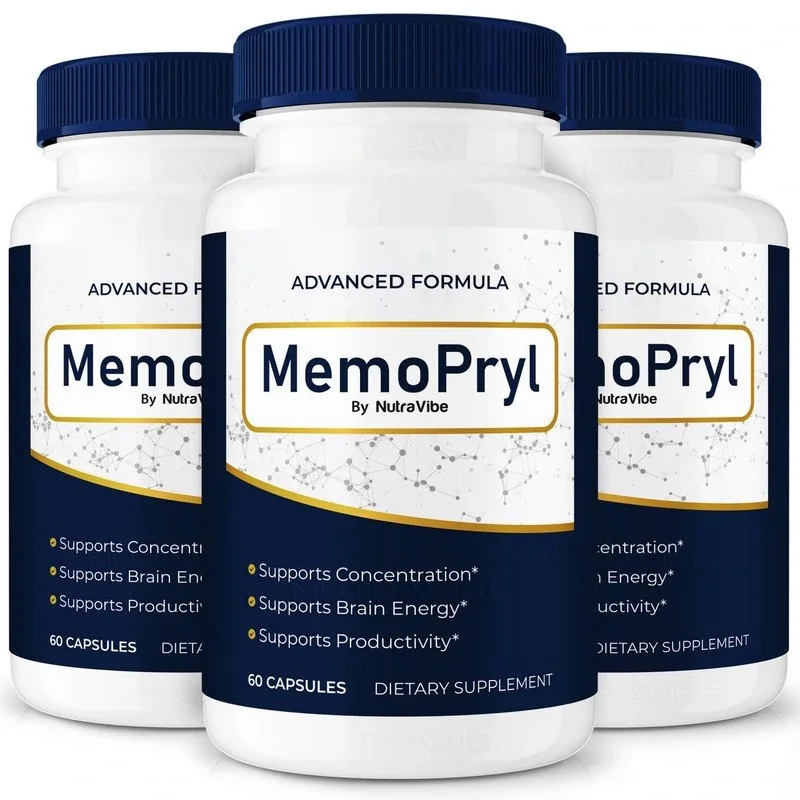
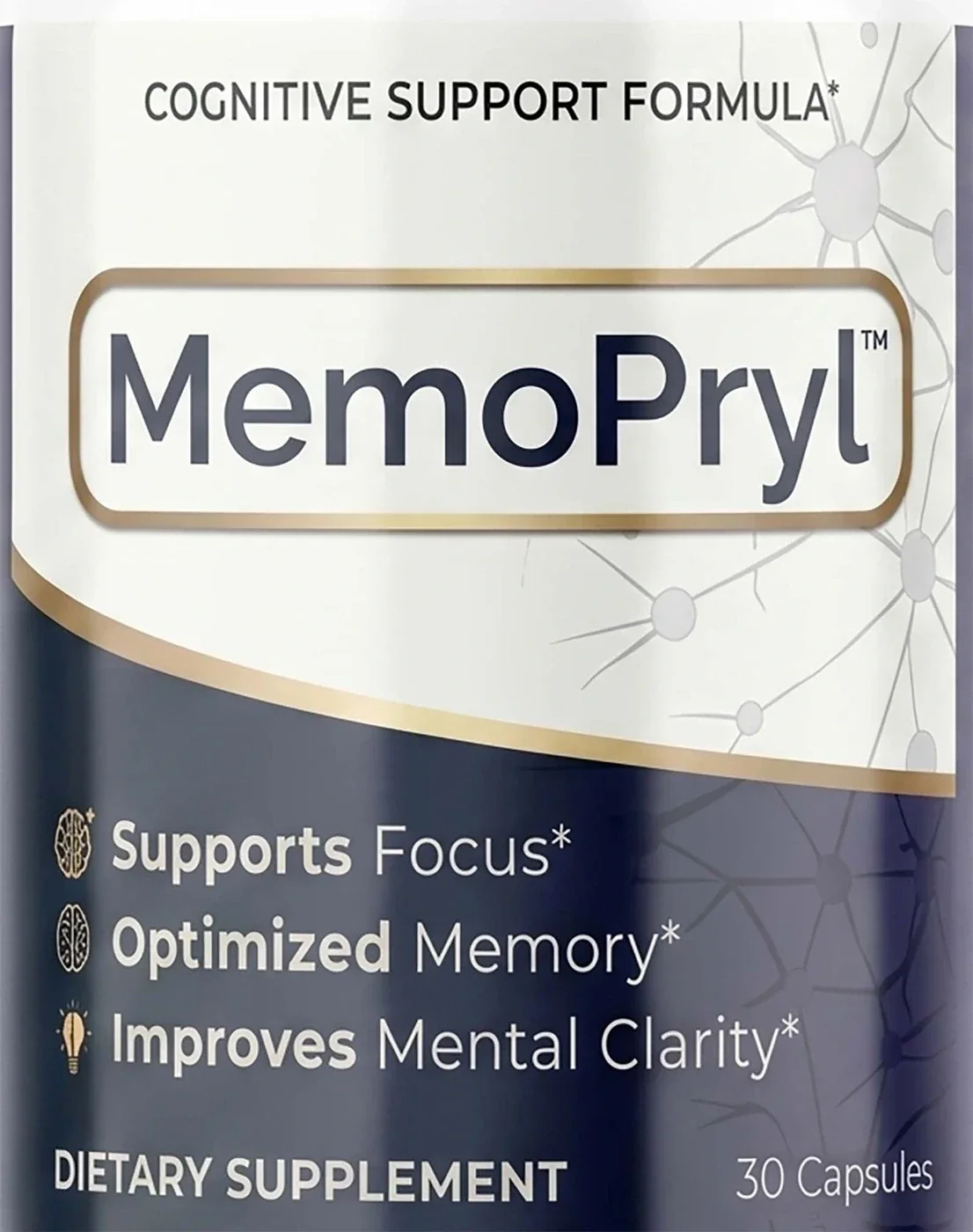
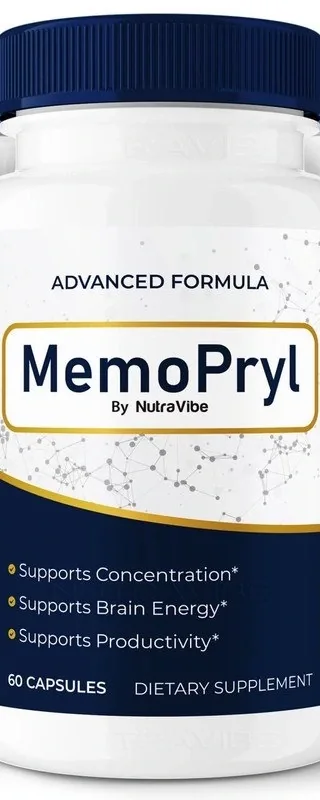
MemoPryl claims six things across its two bottle photos, and each ends in an asterisk. Label A says "Supports Focus*", "Optimized Memory*" and "Improves Mental Clarity*". Label B says "Supports Concentration*", "Supports Brain Energy*" and "Supports Productivity*".
The asterisk points to a small FDA statement. It says FDA has not evaluated the claim and that the product is not meant to diagnose, treat, cure or prevent disease (FDA, Structure/Function Claims). FDA does not approve supplements before they are sold (FDA, Using Dietary Supplements).
Read this as marketing wording, not a result. A structure and function claim describes how a nutrient may affect the body. It is not a promise about you.
"Supports" and "Optimized" are soft verbs. "Improves" on label A is the strongest word on either bottle, and the only one that promises a change.
How does each benefit hold up against the evidence?
Poorly to unclear, claim by claim. No study has tested MemoPryl, so the evidence below is borrowed from single ingredients, at amounts the bottle does not print.
The six cards pair one claim with the best study we found. Open them in order and note how often the answer is "small trial" or "no effect".
- 01Label claim
The bottle says“Supports Focus*”
What the evidence saysNo study has tested MemoPryl. St. John's wort is studied for mood, and glutamine has no memory trial; focus claims rest on ingredients whose amounts are not printed. (NCCIH, St. John's Wort in depth) (MSK, Glutamine)
- 02Label claim
The bottle says“Optimized Memory*”
What the evidence saysGinkgo, at 240 mg a day for about six years, did not lower dementia or Alzheimer's rates in 3,069 adults aged 75 or older. The National Academies found insufficient evidence to justify a public campaign for supplements. (DeKosky 2008, GEM trial, JAMA) (National Academies 2017 report)
- 03Label claim
The bottle says“Improves Mental Clarity*”
What the evidence saysA meta-analysis of nine bacopa trials found it may improve attention speed at 12 weeks or more; NIH's liver database says it is not shown effective for any disease in adequate trials. (Kongkeaw 2014, Bacopa meta-analys.) (LiverTox, Bacopa monnieri)
- 04Label claim
The bottle says“Supports Concentration*”
What the evidence saysPhosphatidylserine at 100 or 300 mg a day for six months in 78 adults raised scores in all groups, placebo included; gains over baseline appeared only in people with lower starting scores. (Kato-Kataoka 2010, soy PS trial)
- 05Label claim
The bottle says“Supports Brain Energy*”
What the evidence saysAcetyl-L-carnitine at 1 to 3 g a day, in dementia trials, did not change dementia severity in a Cochrane review. 'Brain energy' is a marketing phrase, not a measurement. (NIH ODS, Carnitine) (Pennisi 2020, ALC in dementia)
- 06Label claim
The bottle says“Supports Productivity*”
What the evidence saysNo supplement trial measures productivity. Sleep, activity and eating have better support for how well you think through the day. (NIA, Sleep and Older Adults) (HHS, Physical Activity Guidelines)
Claims as printed on the two bottle images: the first three on label A, the last three on label B. Each ends in the FDA asterisk (FDA, Structure/Function Claims).
Which common ad claims fall apart on a closer look?
Nine popular brain-supplement promises fail the same test: the claim is bigger than the trial behind it. Sales pages tend to lean on reviews and testimonials, and the FTC says anecdotes are never enough to back a health claim (FTC, Health Products Guidance).
The table lines each claim up with what studies of these ingredients actually reported. Use it on any brain product, not just this one.
- Label A“Optimized Memory*”No trial has tested MemoPryl. In the 3,069-person GEM trial, ginkgo did not lower dementia rates versus placebo; NCCIH calls the evidence for most supplements inconclusive. (DeKosky 2008, GEM trial, JAMA) (NCCIH, Supplements and Cognition)
- Label A“Improves Mental Clarity*”'Improves' is a strong verb for a structure/function claim. Bacopa trials of 12 weeks or more reported faster attention in a meta-analysis, at 300 mg or more of extract, an amount no bottle image prints. (Kongkeaw 2014, Bacopa meta-analys.) (LiverTox, Bacopa monnieri)
- Label A“Supports Focus*”St. John's wort is studied for mood, not focus, and glutamine has no memory trial. No bottle image prints an amount of any ingredient. (NCCIH, St. John's Wort in depth) (MSK, Glutamine)
- Label B“Supports Concentration*”Ingredient-level evidence at doses this site cannot see. Health claims generally need randomized human testing of the product itself. (FTC, Health Products Guidance)
- Label B“Supports Brain Energy*”'Brain energy' is not a medical measure. A Cochrane review of acetyl-L-carnitine in dementia found no effect on severity. (NIH ODS, Carnitine) (Pennisi 2020, ALC in dementia)
- Label B“Supports Productivity*”Productivity is not something supplement trials measure. The FTC says personal stories are never enough to back a health claim. (FTC, Health Products Guidance)
- Both labelsThe FDA asteriskStructure/function wording is allowed with the FDA disclaimer. It is not FDA approval and not a disease claim. (FDA, Structure/Function Claims)
- Badges“Doctor formulated”, “GMP certified”, “FDA registered”No doctor, certifier or audit is named. FDA registers facilities; it does not approve them or the supplement. (FDA, Hidden Ingredients) (FDA, Using Dietary Supplements)
- Bottle30 capsules and Cognitive Support, or 60 capsules and Advanced FormulaThe two bottle images in the brand set disagree. Only the bottle you receive settles it.
Claims as printed on the two bottle images. Health claims need competent and reliable scientific evidence, generally human trials of the same product (FTC, Health Products Guidance).
What do studies say about the six linked ingredients?
The six names are phosphatidylserine, ginkgo, N-acetyl L-carnitine, St. John's wort, brahmi (bacopa) and L-glutamine. They come from a sibling pack and are unconfirmed for your bottle.
Two have the most attention. In the GEM trial, 3,069 adults aged 75 or older took ginkgo or placebo for about six years, and dementia rates did not differ (DeKosky 2008, GEM trial, JAMA). In a small trial, phosphatidylserine lifted scores mostly in people who began with lower memory scores (Kato-Kataoka 2010, soy PS trial).
| Name | What the research found | Strength |
|---|---|---|
| Phosphatidylserine | Small trial; gains mainly in low scorers (Kato-Kataoka 2010, soy PS trial) | Weak |
| Ginkgo | No lower dementia rate in 3,069 adults (DeKosky 2008, GEM trial, JAMA) | Negative |
| N-acetyl L-carnitine | No effect on dementia severity in a Cochrane review (NIH ODS, Carnitine) | Negative |
| St. John's wort | Studied for mood, not memory (NCCIH, St. John's Wort in depth) | Off target |
| Bacopa (brahmi) | May speed attention after 12+ weeks (Kongkeaw 2014, Bacopa meta-analys.) | Mixed |
| L-glutamine | No memory trial cited (MSK, Glutamine) | None |
Detail on each lives in the ingredient list.
MemoPryl: capsules in 2, 3 or 6 bottlesRead the bottle · check your medicines · 60-day window (confirm)
See packsIs there any benefit I can count on?
The best-supported benefits cost nothing and come in no capsule. Regular activity, enough sleep and a Mediterranean-style diet have the clearest links to a sharper mind.
CDC says short bursts of movement can boost memory and thinking skills (CDC, Physical Activity and Brain). NIA says both non-REM and REM sleep help you store memories (NIA, Sleep and Older Adults). Diet findings are observational, so they show a link, not a cause (AAIC 2017, diet and cognition).
Move
Adults need 150 to 300 minutes of moderate activity a week (HHS, Physical Activity Guidelines).
Sleep
Seven to nine hours supports memory storage (NIA, Sleep and Older Adults).
Eat
MIND and Mediterranean eating patterns tracked with fewer cognitive lapses (AAIC 2017, diet and cognition).
What are the real pros and cons of trying MemoPryl?
The pros are small and practical. The cons are mostly unknowns and medicine risks, which is why a pharmacist should see the bottle first.
Pros
- Capsules, in packs of 2, 3 or 6 bottles
- A 60-day window to confirm at checkout
- A phone and email order desk
Cons
- No Supplement Facts panel on any image we hold
- No amounts and no MemoPryl trial
- Two bottle labels that disagree
- Ginkgo and St. John's wort carry interaction risk
Keep taking prescribed medicine, and ask your doctor or pharmacist before you start.
So are the benefits worth ordering for?
Only if you accept that the benefit is unproven and you have cleared your medicines first.
If you go ahead, write down one measurable goal, such as remembering your weekly list without notes, and judge it by day 60. The results timeline shows how.
FAQ01
MemoPryl questions people ask
What are the main benefits of MemoPryl?
The labels claim support for focus, memory, mental clarity, concentration, brain energy and productivity. Each claim carries an FDA asterisk, and no MemoPryl trial backs any of them. Treat them as marketing wording until an outside study says otherwise.
Can MemoPryl improve memory?
Nobody knows yet. MemoPryl has no published trial, and the linked ingredients show small or negative results for memory in studies. The GEM trial found ginkgo did not lower dementia rates. See a doctor about any memory worry.
Does MemoPryl give you energy?
Label B claims it supports brain energy, but no image prints a caffeine or stimulant ingredient. The named ingredients are not known as stimulants. If you feel tired all day, sleep, thyroid and medicines are common causes to check.
Does MemoPryl help with focus and concentration?
It is marketed that way, but evidence is thin. Bacopa trials report faster attention scores after about 12 weeks, yet amounts in MemoPryl are not printed. Sleep and regular breaks help more reliably.
Is MemoPryl a nootropic?
It is sold in that category, which means a product marketed to support thinking. The word has no legal meaning. MemoPryl is a dietary supplement, not a drug, and it is not meant to treat any condition.
Are there any proven benefits of the ingredients in MemoPryl?
Not for memory in healthy adults. Bacopa has the most positive attention data, and phosphatidylserine helped some low scorers in one small trial. Ginkgo, carnitine and glutamine have not shown clear memory gains.
Who wrote this02
Written and reviewed by
Pages built from the bottle images, the seller's product notes and linked NIH, FDA, FTC and peer-reviewed sources.
Last updated . Learn about our editorial standards and how we check reviews. This website is run by Official stocking desk for MemoPryl, not by the manufacturer or the distributor of the bottle. We make money when you buy through our order links.
Keep reading
More about MemoPryl
Official stocking desk for MemoPryl
Ready to look at MemoPryl?
Read the bottle you receive, check your medicines with a pharmacist, then choose a pack. Prices and the guarantee terms are confirmed at checkout.
- Order desk: +1 (302) 200-3480
- 60-day window (confirm at checkout)
- Ships from the U.S. unless the checkout says otherwise