Guide · Reading supplement labels
Nootropic Label Glossary: Terms Decoded
A nootropic label glossary turns marketing words into plain meanings. Terms such as extract, standardized, blend and Supports* sound technical but prove little by themselves. Learn what each one promises, what it leaves out, and what to check on your MemoPryl bottle.
Written by the MemoPryl label deskUpdated
What does nootropic actually mean on a bottle?
Nootropic is a marketing word for a substance sold to help thinking, memory or focus. It has no legal definition for supplements, so a bottle can use it without meeting any test.
The word covers very different things. Caffeine, herbal extracts, amino acids and lab-made compounds all get the label. NCCIH calls the evidence for most memory supplements inconclusive, limited or inconsistent (NCCIH, Supplements and Cognition).
MemoPryl is sold in capsules to adults for memory, focus and brain energy. Its bottle says "Dietary Supplement", which is the legal category. "Nootropic" is how shoppers and search engines describe it, not what the label certifies.
Look for the words "Dietary Supplement" and a Supplement Facts panel. The first is the category. The second is where the real information lives.
What do Supports Focus* and Optimized Memory* really promise?
They promise very little in legal terms. These are structure and function claims, and FDA does not review them before sale (FDA, Structure/Function Claims).
A maker must have evidence that such a claim is truthful and must notify FDA within 30 days of marketing. The label must also carry a disclaimer saying FDA has not evaluated the claim and that the product is not meant to diagnose, treat, cure or prevent any disease (FDA, Structure/Function Claims). The asterisk sends you to that disclaimer.
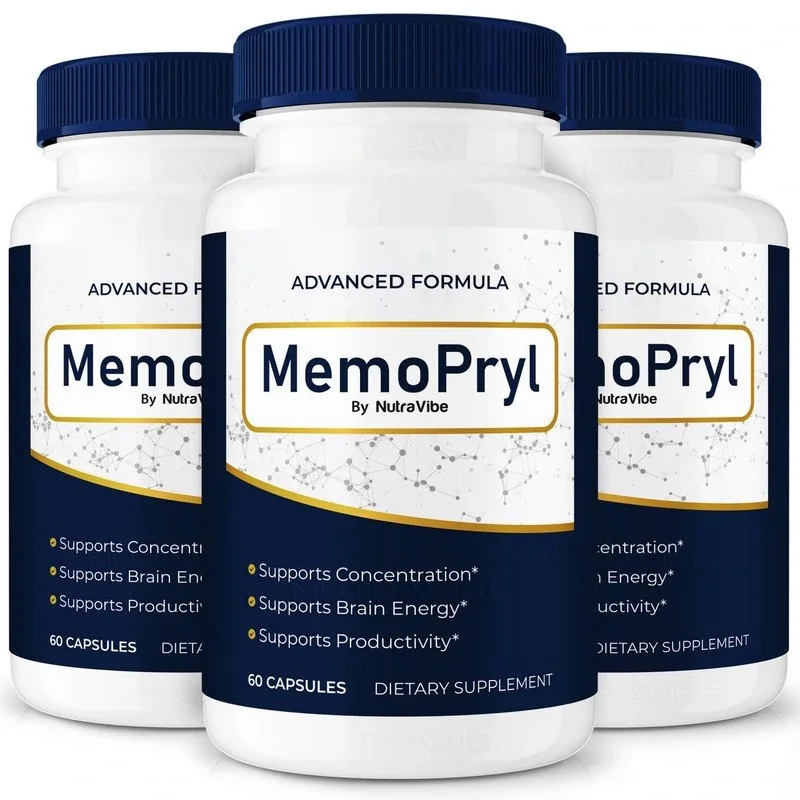
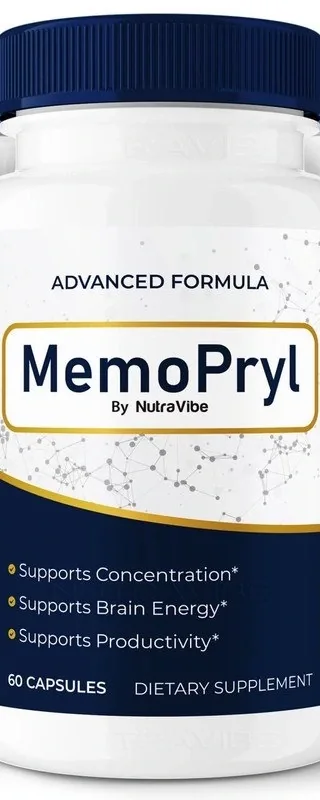
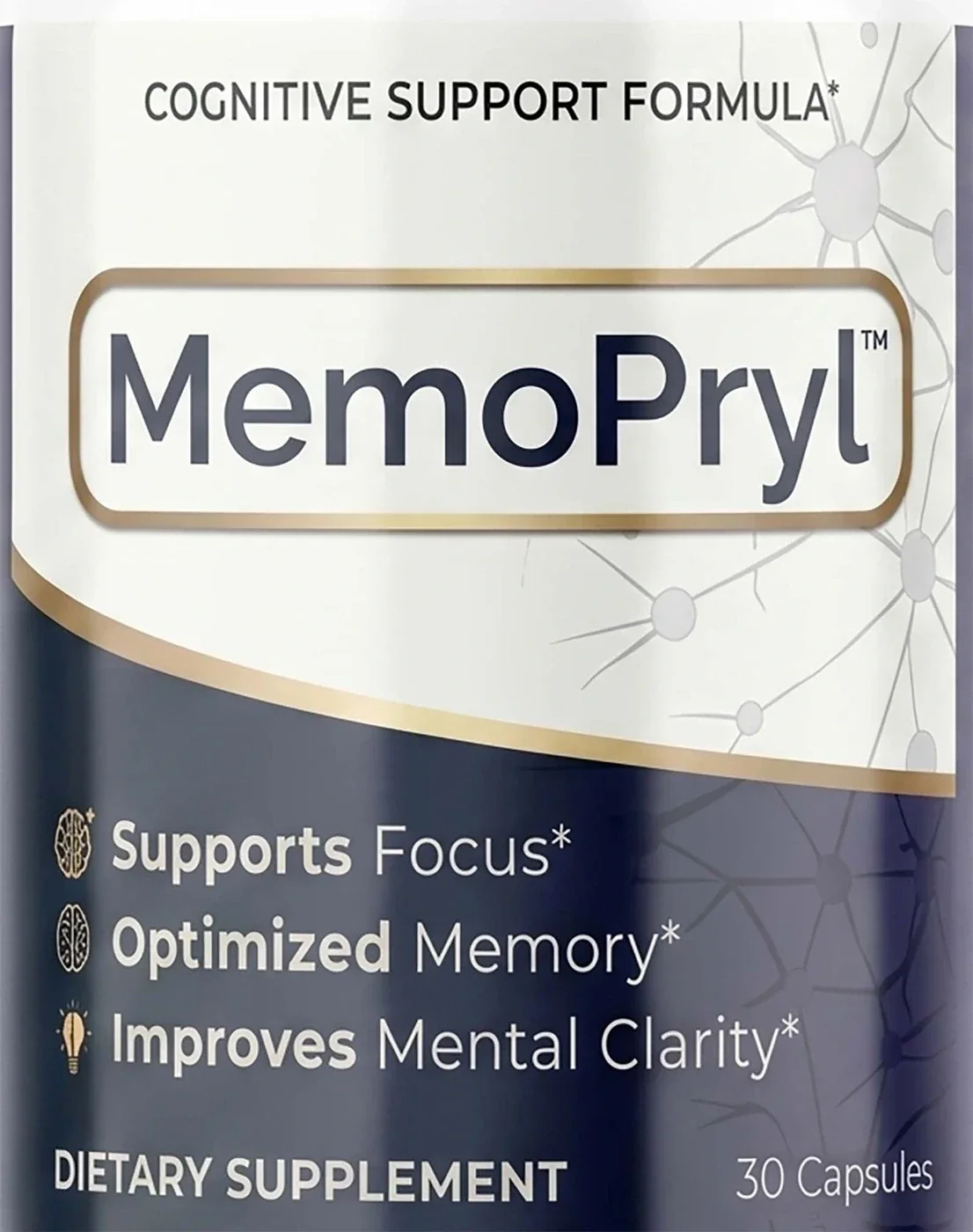
Label A of MemoPryl reads "Supports Focus*", "Optimized Memory*" and "Improves Mental Clarity*". Label B reads "Supports Concentration*", "Supports Brain Energy*" and "Supports Productivity*". Neither picture shows the disclaimer text we would expect.
| Wording | Plain reading | What it is not |
|---|---|---|
| Supports* | Said to play a role in a body function | A promise of any result for you |
| Optimized* | The maker's word for a tuned recipe | A measured improvement |
| Improves* | A stronger verb that still needs evidence on file | Proof from a trial of the product |
| Clinically studied | Not on either MemoPryl label | Applies to ingredients only if a trial used that same amount |
How do I read the Supplement Facts panel terms?
Start at the top of the panel and read down: serving size, servings per container, then each ingredient and its amount. Those three lines let you compare a bottle with a study or with another brand.
No Supplement Facts panel is printed on any MemoPryl image we hold. The terms below are what to look for when your bottle arrives. Our supplement facts page shows what is missing from each picture.
Serving size
The number of capsules the amounts refer to. If the panel says two capsules, every figure is for two.
Servings per container
How many servings the bottle holds. Divide by your daily servings to count days of supply.
mg and mcg
A milligram is a thousand times a microgram. Mixing them up is the easiest way to misjudge a dose.
% Daily Value
Shown for nutrients that have an official reference. Many herbs have none, so you will often see a dagger or no figure.
Other ingredients
Fillers, binders and the capsule shell. Check it for allergens such as soy or gluten.
Suggested use
The directions. Follow them exactly. This site gives no dose of its own.
What do extract, standardized and blend mean?
An extract is a concentrated form of a plant, pulled out with water or alcohol. Standardized means the maker adjusts the extract to a set level of a marker compound, so one batch matches the next.
The words help only when the amounts are printed. A line reading "ginkgo biloba leaf extract" with no milligrams cannot be compared with the 120 mg of extract twice a day used in the large ginkgo trial (DeKosky 2008, GEM trial, JAMA).
A proprietary blend lists several ingredients under one total weight, without the share of each. It lets a brand hide how much of a cheap filler or an expensive herb is inside. If your bottle uses a blend, ask the seller for the individual amounts.
Natural does not mean safe. NCCIH reminds buyers that some products sold as supplements may carry unlisted ingredients, and that herbs can interact with medicines (NCCIH, Using Supplements Wisely).
Next step: ask whether the extract is standardized, to what, and at what amount per capsule. A brand that knows the answer will give it.
MemoPryl: capsules in 2, 3 or 6 bottlesRead the bottle · check your medicines · 60-day window (confirm)
See packsWhat do the ingredient names on a MemoPryl-style bottle mean?
Six names are linked to MemoPryl through a sibling pack: phosphatidylserine, ginkgo biloba leaf, N-acetyl L-carnitine HCl, St. John's wort, brahmi and L-glutamine. They are not confirmed for the bottle you receive, and no amount is known.
Some of these names hide small traps. "HCl" means hydrochloride, a salt form that helps the compound dissolve. "Brahmi" is also used for another plant, Gotu kola, so the Latin name Bacopa monnieri is what to look for (LiverTox, Bacopa monnieri). "Leaf" matters for ginkgo, since fresh ginkgo seeds are toxic (NCCIH, Ginkgo).
Tap a name below to see its status, then open its page for the studies and the cautions.
- 1PhosphatidylserineNamed in the seller's notes · amount not printed
- 2Ginkgo biloba LeafNamed in the seller's notes · amount not printed
- 3N-Acetyl L-Carnitine HClNamed in the seller's notes · amount not printed
- 4St. John's WortNamed in the seller's notes · amount not printed
- 5Brahmi / Bacopa monnieriNamed in the seller's notes · amount not printed
- 6L-GlutamineNamed in the seller's notes · amount not printed
The seller's notes name these six "on a sibling MemoPryl pack from the same listing family" and says to confirm the current bottle. No bottle image we have shows a Supplement Facts panel, and the order of a panel is unknown, so this order comes from the seller's notes, not the label.
The ingredients page gives the full picture, and each ingredient has its own page.
Which quality terms can I trust, and which are just badges?
Trust a quality term only when someone checkable stands behind it. A badge on a bottle describes what the brand says about itself. A report with a lot number, a lab name and a date is evidence.
MemoPryl shows ten brand badges, such as GMP, FDA registered, GMO free and Made in the USA. None names a certifier. FDA also notes that it does not approve manufacturing facilities, so "FDA-approved facility" is a phrase to treat with care (FDA, Hidden Ingredients).
| Term | Plain meaning | Proof to ask for |
|---|---|---|
| GMP | Good manufacturing practice, a set of production rules | The audit or certificate and who issued it |
| Third-party tested | An outside lab checked the product | The lab's name and report |
| CoA | Certificate of analysis for one lot | The report itself, not only a code |
| FDA registered | The site told FDA it exists | Nothing: registration is not approval |
| Doctor formulated | A doctor was involved, per the brand | The doctor's name and role |
The lot MP-26/ME-4190 and CoA code MP-4190-26-ME are seller references, not lab proof, and no lab report is published. See the quality claims page for each badge.
Which label words should make me stop and ask a pharmacist?
Any herb name, and especially St. John's wort or ginkgo. If either appears on your bottle, ask your pharmacist before you take a capsule, and keep taking your prescribed medicine as directed.
St. John's wort can weaken many medicines, including antidepressants, birth control pills, blood thinners and some HIV, seizure, transplant and heart drugs (NCCIH, St. John's Wort safety). Ginkgo may raise bleeding risk with blood thinners or aspirin (FDA, Mixing Meds and Supplements).
A "Warnings" or "Consult your physician" line is a good sign. Silence is not. Neither MemoPryl picture shows any warnings text.
Stop a supplement and call your clinician if you get a reaction. FDA takes reports of serious reactions through its safety portal (FDA, Report a Supplement Problem).
FAQ01
MemoPryl questions people ask
What does the word nootropic mean on a label?
A nootropic is a marketing term for any substance sold to support thinking, memory or focus. It has no legal meaning for supplements and covers herbs, amino acids and caffeine. Evidence differs widely between ingredients, so judge each name and amount, not the word.
What does the asterisk after a claim mean?
The asterisk points to the FDA disclaimer, which says the agency has not evaluated the statement and the product is not meant to diagnose, treat, cure or prevent disease. It marks a structure and function claim, which needs no FDA approval before sale.
What does proprietary blend hide on a supplement label?
A proprietary blend lists several ingredients under one combined weight without giving each amount. You cannot tell how much of any single ingredient you get. Ask the seller for individual amounts, or compare with brands that print every figure.
What does standardized extract mean?
Standardized means the maker adjusts the extract so it holds a set level of a marker compound. That helps batches match, but it says nothing about whether the dose suits you or works. Look for both the standard and the milligrams per capsule.
Is a certificate of analysis the same as lab proof?
Only if you can read the report. A real certificate of analysis shows the lab, the lot, the tests and the results. A bare code, like the lot and CoA references the seller lists for MemoPryl, is a reference and not proof.
Why is brahmi sometimes confusing?
Brahmi is a common name used for more than one plant, including Bacopa monnieri and Gotu kola. Check for the Latin name Bacopa monnieri on the panel. If only brahmi appears, ask the seller which plant is inside.
What does FDA registered mean on a supplement?
It means a facility told FDA it exists. It does not mean FDA inspected, tested or approved the product. FDA does not approve dietary supplements or their labels before sale, so treat the badge as a description.
Who wrote this02
Written and reviewed by
Pages built from the bottle images, the seller's product notes and linked NIH, FDA, FTC and peer-reviewed sources.
Last updated . Learn about our editorial standards and how we check reviews. This website is run by Official stocking desk for MemoPryl, not by the manufacturer or the distributor of the bottle. We make money when you buy through our order links.
Keep reading
More about MemoPryl
Official stocking desk for MemoPryl
Ready to look at MemoPryl?
Read the bottle you receive, check your medicines with a pharmacist, then choose a pack. Prices and the guarantee terms are confirmed at checkout.
- Order desk: +1 (302) 200-3480
- 60-day window (confirm at checkout)
- Ships from the U.S. unless the checkout says otherwise